

E-mobility requires new innovations for high-productivity laser welding
Two recent advances in laser welding, described in a PhotonicsViews special issue, have the ability to increase both productivity and part quality for e-mobility applications.
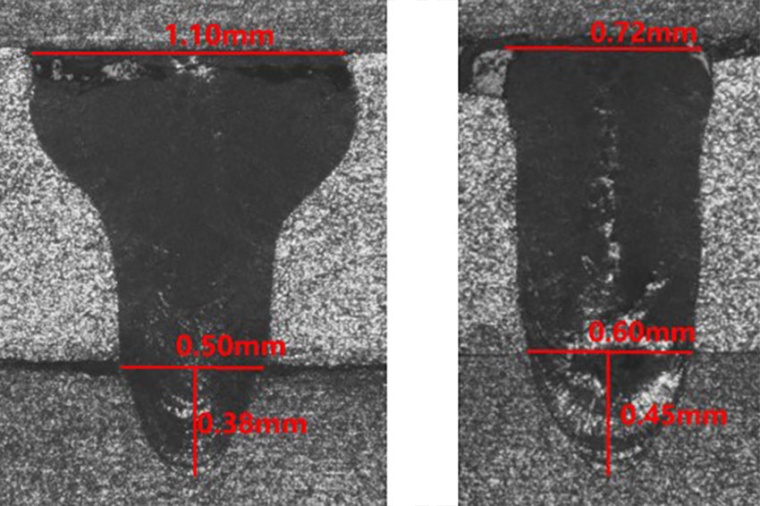
Laser welding is a >1 billion dollar market annually and is experiencing significant growth, driven by high-volume e-mobility applications, which require a previously unprecedented level of productivity and part quality. Two recent technical breakthroughs with fiber lasers meet these stringent requirements: High-precision spatial and temporal control of the laser beam to stabilize the melt pool, and real-time process monitoring integrated directly into the laser source.
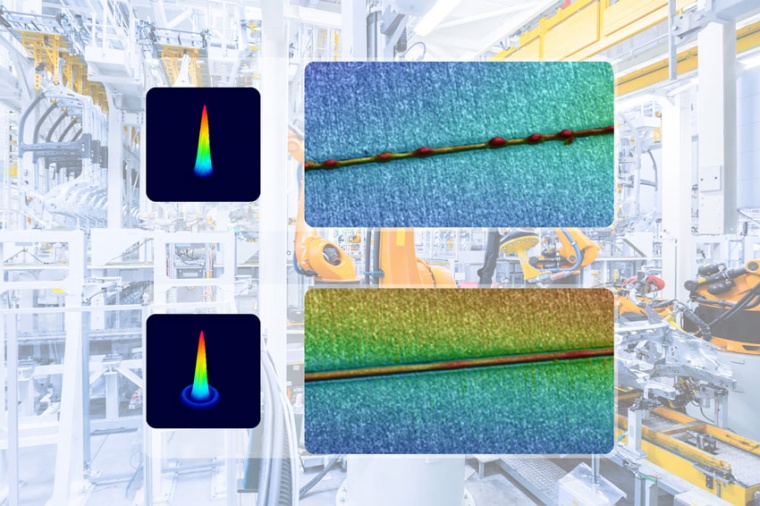
The global welding equipment market is nearly $20 billion annually. Automotive welding represents the largest segment of this market, comprising ~25 % of the total. Laser-based welding tools make up only a small fraction of these sales – approximately $1 billion of annual laser sales – and capturing more of the welding market thus represents a significant opportunity for laser-based tools. Adoption of laser-based welding tools is driven by their ability to increase productivity and part quality because of the precision, speed, consistency, and material compatibility of laser welding and because of the reliability and high up-time of these tools – particularly fiber-laser-based tools.
Beyond displacing legacy welding technologies, laser welding enables production of welds that are difficult or impossible using non-laser technologies, further increasing the size of the addressable market.
E-mobility is driving a significant increase in the need for welding tools, both for conventional automotive welding tasks – e.g., body-in-white production – and, more importantly, for producing components specific to e-mobility. This growing e-mobility market represents an especially significant opportunity for laser welding because it requires high volumes, thus demanding high productivity, and production of consistent, high-quality welds. Furthermore, e-mobility applications often involve difficult-to-weld metals, such as aluminum and copper. Battery production for electric vehicles is a well-known example of an e-mobility application that is dependent on laser welding for a number of key manufacturing steps. In addition, emerging e-mobility applications, such as fuel-cell production, are being enabled by laser welding. The demand for laser welding tools will continue to increase as these markets grow and as laser-based welding processes continue to improve.
Two recent advances, described in the article cited below, demonstrate the ability of laser welding to increase both productivity and part quality for e-mobility applications.
Read the interactive issue in the Adobe Cloud, or download the single-article PDF – Dahv Kliner, Andrea Braglia, Alessio Califano, Ping Huang, and Christo Gavrilov (all: nLIGHT): E-mobility requires new innovations
for high-productivity laser welding, PhotonicsViews 22 (D1), April 2025, pp. 17–22
Company
nLIGHT, Inc.4637 NW 18th Ave
Camas, WA 98607
US

most read

From Gamescom to the Factory
How the Gaming Industry Is Driving Automation
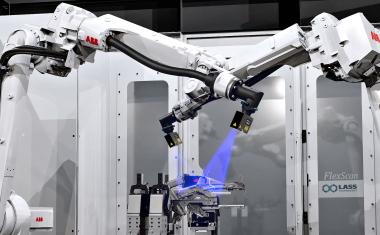
3D laser scanning for 100 percent inspection
Modern production requires precise, fast, and fully automated inspection processes. The robot-assisted inline measurement system Flexscan meets this requirement with two 3D compact sensors
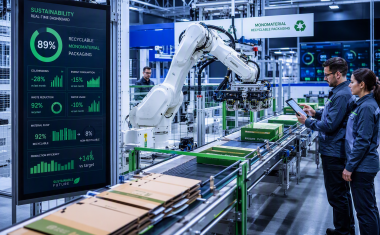
Packaging Is Becoming a Strategic Task in Production
The new EU Packaging Regulation affects more than just packaging manufacturers. Production, logistics, and automation experts must also reassess their processes, materials, and equipment.
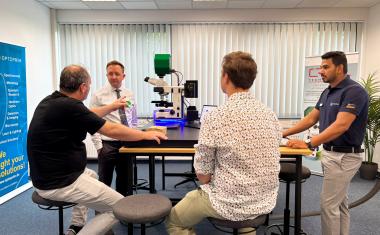
Microspectrophotometer in Practice
During a three-day Open House in Unterschleißheim near Munich, Optoprim Germany and Craic Technologies demonstrated integrated UV–visible–NIR and Raman microspectroscopy under real research conditions.

It Does Not Always Have to Be a Humanoid Robot
Mythomorphic design adds a distinct perspective to social robotics. Inspired by myths and fantasy rather than humans or animals, the article classifies examples and examines related opportunities and risks.