

Igus expands robotics marketplace RBTX
Low Cost Automation now available in 18 countries.
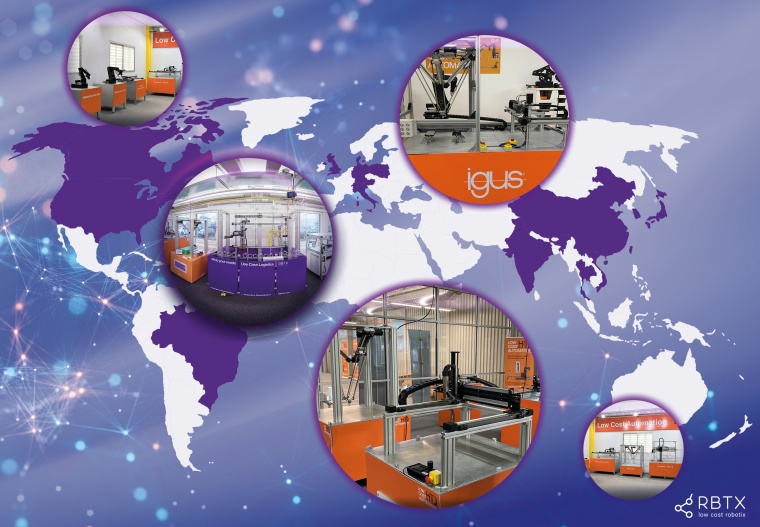
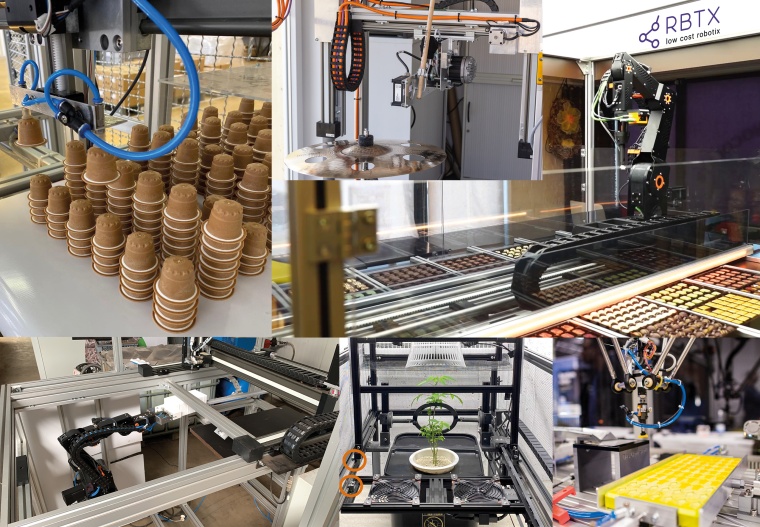
The robotics marketplace RBTX.com helps to find the right automation solution for individual applications. So far, the RBTX platform has been available in eight countries. Now Igus is expanding the offer and launching the robotics marketplace in ten additional countries - three more are to follow.
RBTX includes an online marketplace for cost-effective robotics components and complete solutions, the RBTXpert remote integration service and customer testing areas at various locations worldwide, where customers can test planned applications live together with an RBTXpert. In addition to Austria, France, the UK, the USA, Canada, India and Singapore, Low Cost Automation is also available in Poland, Switzerland, Denmark, Italy, Japan, China, Taiwan, South Korea, Vietnam and Thailand. Spain, Brazil and Turkey are to follow.
Company
igus SE & Co. KGSpicher Str. 1 a
51147 Köln
Germany


most read

Siemens Consolidates Its Automation Business into a New Unit Called Automation
Rainer Brehm, who previously served as COO of the automation business and CTO of Digital Industries, was appointed president of the new unit.

The photonics industry is growing significantly again: New orders rise by 17 percent
The German photonics industry saw significant growth in the first half of 2026. Semiconductors, defense, aviation, and quantum technologies are the main drivers of this growth.

European machine vision expects slight recovery and growth in 2026
According to the VDMA Machine Vision department, sales are expected to increase by around 3%, following a decline of 2% in 2025.

Vision Components Celebrates 30 Years of Machine Vision with an Anniversary Event at Vision 2026
Vision Components is celebrating 30 years in business. At Vision 2026, the manufacturer is hosting an anniversary celebration featuring an exhibition, live music, and new products.

Solid-State Transformers for AI Data Centers
As part of a strategic partnership, Siemens and Reinhausen are developing a solid-state transformer for AI data centers with an 800-volt DC system.