

A new concept for automotive battery boxes manufacturing
Optical coherence tomography in a laser processing head can accomplish precise real-time post-process control and position adjustment for the filler wire.
The design of battery boxes must meet multiple strict requirements, including crash resistance, stability, and water and gas tightness. Laser welding with filler wire is the preferred joining technology for production of battery boxes. An OCT system by Lessmüller has been integrated into the Scansonic ALO4 tactile processing head for intelligent highly automated and precise process monitoring and quality control. With high welding speeds and stable process control, the combination of ALO4 with OCT enhances production efficiency and ensures outstanding seam quality.
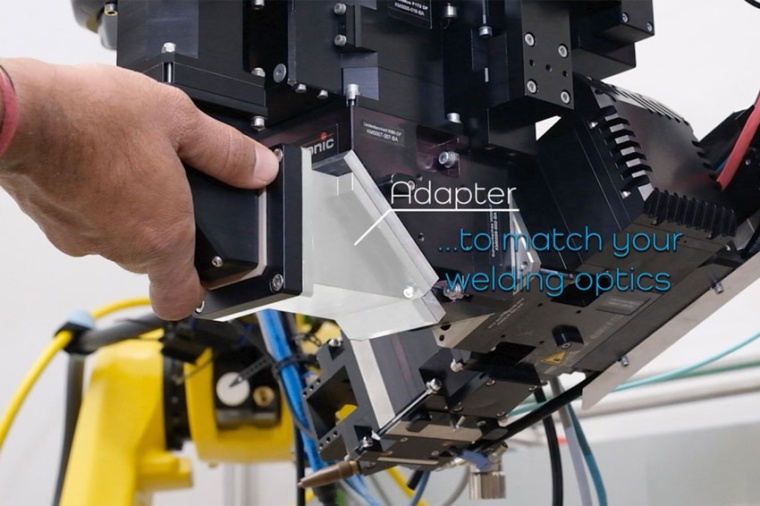
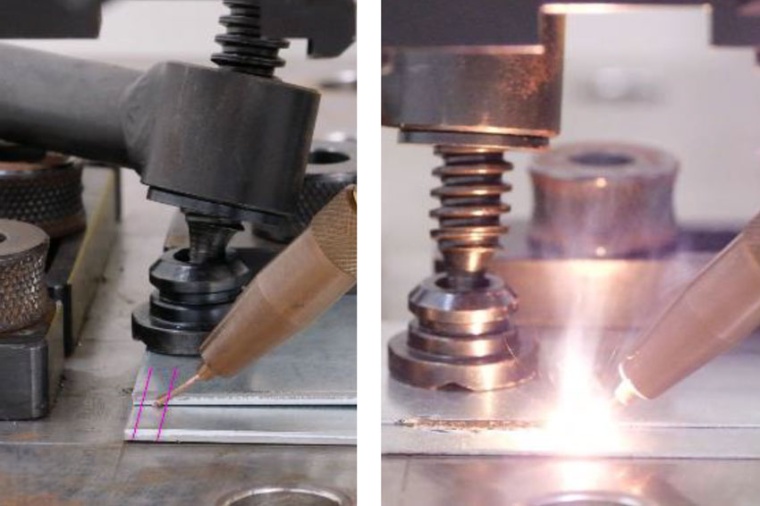
Laser welding offers exceptional precision, automation and rapidity making it the perfect technology for accurate and efficient joining of large volumes. During laser welding the processing laser is automatically guided along the component by SPS-controlled 2D or 3D optics with or without filler wire. Tactile laser welding with filler wire has emerged as a highly effective joining technique, offering advantages like lower heat input, and particularly accurate and tight seams. The addition of filler wire has proven to be the most effective way to control microcracks and boost joint strength.
In order to improve the tactile laser welding accuracy and efficiency, Lessmüller Lasertechnik developed several laser processing monitoring techniques. One of them is the WELDEYE high-speed camera system that allows real-time visualization of surface topography and the identification of key quality characteristics.
However, with optical coherence tomography (OCT) online monitoring, it is possible to modify the processing position and parameters during the process based on the measurement data, ensuring consistent process control that eliminates the need for post-production quality examination. The ability to make adjustments during the process significantly reduces process time and material waste, increasing overall efficiency. Developed by Lessmüller Lasertechnik, OCT can be also successfully applied for the welding with oscillating laser beam.
Read the interactive issue in the Adobe Cloud, or download the single-article PDF (button below) – Nataliya Deyneka Dupriez (Lessmüller Lasertechnik) & Philip Marben (Scansonic): A new concept for automotive battery boxes manufacturing, PhotonicsViews 22 (D1), April 2025, pp. 62–68
Company
Scansonic MI GmbHSchwarze-Pumpe-Weg 16
12681 Berlin
Germany


most read
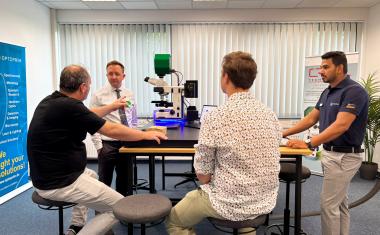
Microspectrophotometer in Practice
During a three-day Open House in Unterschleißheim near Munich, Optoprim Germany and Craic Technologies demonstrated integrated UV–visible–NIR and Raman microspectroscopy under real research conditions.
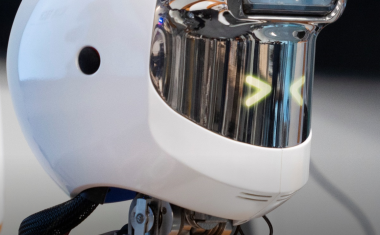
Powerful in operation, intelligent in collaboration
How Faulhaber Drive Systems Are Bringing Humanoid Robotics Closer to Everyday Use

From Gamescom to the Factory
How the Gaming Industry Is Driving Automation
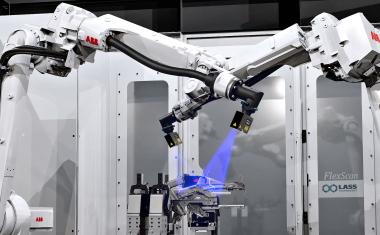
3D laser scanning for 100 percent inspection
Modern production requires precise, fast, and fully automated inspection processes. The robot-assisted inline measurement system Flexscan meets this requirement with two 3D compact sensors

Packaging Is Becoming a Strategic Task in Production
The new EU Packaging Regulation affects more than just packaging manufacturers. Production, logistics, and automation experts must also reassess their processes, materials, and equipment.