

Open call for LBAAM technology in production
On 2 May 2022, the EU-funded Pulsate project launched the Technology Transfer Experiments (TTE) open call for LBAAM technology in production environments.
The Pulsate network is designed and dedicated to boosting the adoption of laser-based advanced and additive manufacturing (LBAAM) technology that will empower the European manufacturing industry digitalization has launched its 2nd open call for technology transfer experiments (TTE).

The TTE is an end-user-relevant case study applicable to laser-based equipment for the Advanced and Additive Manufacturing market, within one of the following areas of experimentation: laser equipment integration, interoperability, and robust automation; technology for cost-effective laser-based manufacturing; first part right and zero-defect laser-based production; flexible technology for small to large batches; and from CAD to PLM: data integration and flow.
To participate, a consortium of minimum two companies acting as technology provider (system integrator) and adopter / end user (manufacturing company) can apply, where SME or slightly bigger legal status of all consortium partners is required. Companies must be legally established in the EU member state or associated country, and their experiments should have a minimum TRL level between 5 and 7.
Proposals should be submitted by the 29th of July 2022 at 17:00 CEST (Brussels Time) through pulsate-tte.fundingbox.com.
The coordinators prepared a number of useful documents that will support the participants in writing the winning proposal. All the resources including webinars could be found at pulsate-tte.fundingbox.com/pages/OCdocuments.
Why is LBAAM adoption so important?
The laser-based advanced and additive manufacturing technology represents a turning point for many industries that are looking to achieve flexible manufacturing solutions and highly digitalized production environments.
Many of these environments, such as robotics, artificial intelligence (AI), and the Internet of Things that are involving the LBAAM technology, are revealing extremely beneficial outcomes for sectors such as aerospace, automotive, medical devices, and industrial machinery, customized electronics, and textile clothing.
The main drivers when boosting the competitiveness of EU manufacturing are production costs and time-to-market reduction, quality and flexibility improvement, access to skills and knowledge, risk reduction and market access.
Here Pulsate plays a key role as it brings together a strong consortium comprising six competence centers (AIMEN, FTMC, MTC, SINTEF, Fraunhofer, and CEA) with high-level expertise in LBAAM and digitization, the European Photonics Industry Consortium (EPIC) to support the acceleration of EU innovative scale-up initiatives, and two highly innovative SMEs (CLESGO & Fundingbox).
Company
European Photonics Industry Consortium EPIC17 Rue Hamelin
75016 Paris
France



most read
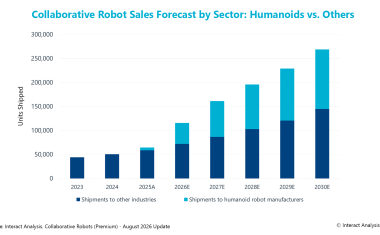
Humanoid robotics is driving demand for cobot arms and actuators
According to recent analyses, global production of humanoid robots exceeded the 20,000-unit mark in 2025 and is expected to more than triple in 2026.

IMTS 2026: America's Manufacturing Sector Focuses on Growth and Technology
The largest manufacturing trade show in the Western Hemisphere is bringing together 1,788 exhibitors this year, including about 400 companies participating for the first time.

ZVEI Calls for Swift Protection of Critical Power Infrastructure
The association has issued a statement in response to the recent attempted attacks on substations in Brandenburg and North Rhine-Westphalia and warns of the consequences for Germany's energy security.

Siemens Consolidates Its Automation Business into a New Unit Called Automation
Rainer Brehm, who previously served as COO of the automation business and CTO of Digital Industries, was appointed president of the new unit.
Vision 2026 Breaks Exhibitor Record
About 500 exhibiting companies—about two-thirds of which are from abroad and about 30 percent of which are first-time exhibitors—are showcasing their products at the trade show.