

Trumpf boosts 3D cutting speed
The German high-tech company has developed a new technology that increases the speed and efficiency of sheet-metal cutting.
Known as BrightLine Speed, this innovative solution offers particularly striking benefits for the 3D cutting of hot-formed parts – for example, those used to produce B-pillars and door frames in auto manufacturing.
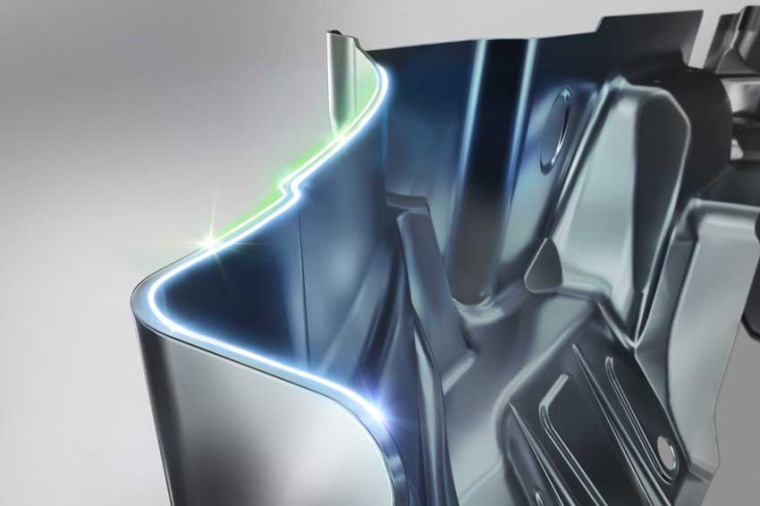
“It allows us to increase cutting speed by up to sixty percent for sheets up to four millimeters thick,” says Trumpf product manager Ralf Kohllöffel. But that’s not all: BrightLine Speed also consumes around fifty percent less cutting gas per part than conventional laser cutting. What’s more, it makes the cutting process up to fifteen percent more productive with the same laser power, so each part requires correspondingly less energy to fabricate. “Our new cutting technology is faster and uses less gas – and that translates into tangible cost savings and a real boost in productivity for our customers,” says Kohllöffel.
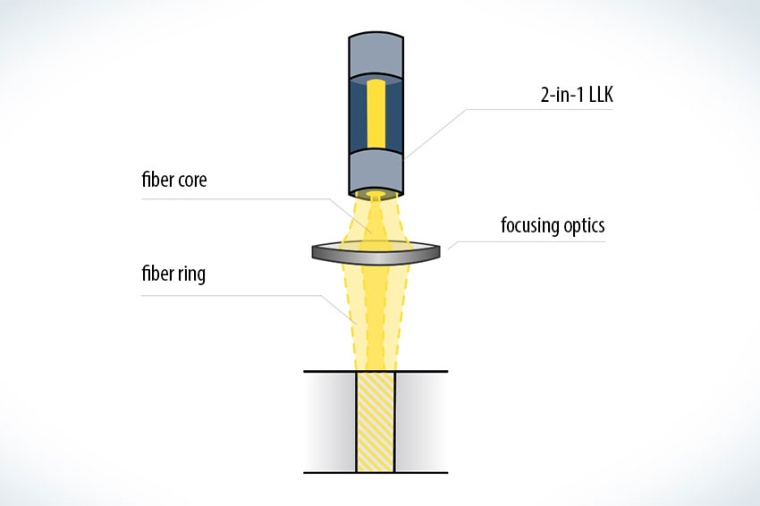
At the heart of BrightLine Speed is a new, Trumpf patented laser light cable (LLK), a special ‘2-in-1’ innovation with an inner and an outer fiber core. A TruDisk disk laser couples the laser light into the LLK and distributes the laser power to the inner and outer cores using a device known as a wedge switch. This allows users to adapt the laser power and beam profile more precisely and flexibly to the thickness of the sheet currently being processed.
Company
TRUMPF SE + Co. KGJohann-Maus-Straße 2
71254 Ditzingen
Germany


most read

Siemens Consolidates Its Automation Business into a New Unit Called Automation
Rainer Brehm, who previously served as COO of the automation business and CTO of Digital Industries, was appointed president of the new unit.
Solid-State Transformers for AI Data Centers
As part of a strategic partnership, Siemens and Reinhausen are developing a solid-state transformer for AI data centers with an 800-volt DC system.
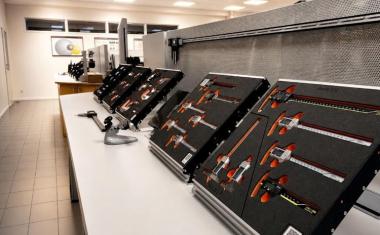
Mitutoyo Open House Day 2026: Focus on Precision Measurement Technology
This free event is aimed at professionals in manufacturing and quality assurance who would like to learn about the latest developments in precision measurement technology.
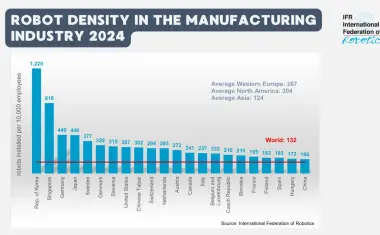
Global robot density: Western Europe leads ahead of North America and Asia
In the EU-27, the robot density is 231, which is above the global average of 132.

Progress on the Impact 2030 Sustainability Roadmap
Schneider Electric reports significant progress in implementing its Impact 2030 sustainability strategy for the first half of 2026.