

“Milestone in quantum sensor technology”
In medical care, magnetic fields of heart and brain activity are measured to detect diseases at an early stage. To measure even the smallest magnetic fields, researchers at Fraunhofer IAF are working on a new approach: diamond-based laser threshold magnetometry.
The idea is to use diamond with a high density of nitrogen-vacancy centers in a laser system. Now the researchers have succeeded in reaching a milestone: They were able to demonstrate the world's first measurement of magnetic-field-dependent stimulated emission and even set a new contrast record. Thus, they have demonstrated the principle of laser threshold magnetometry for the first time.
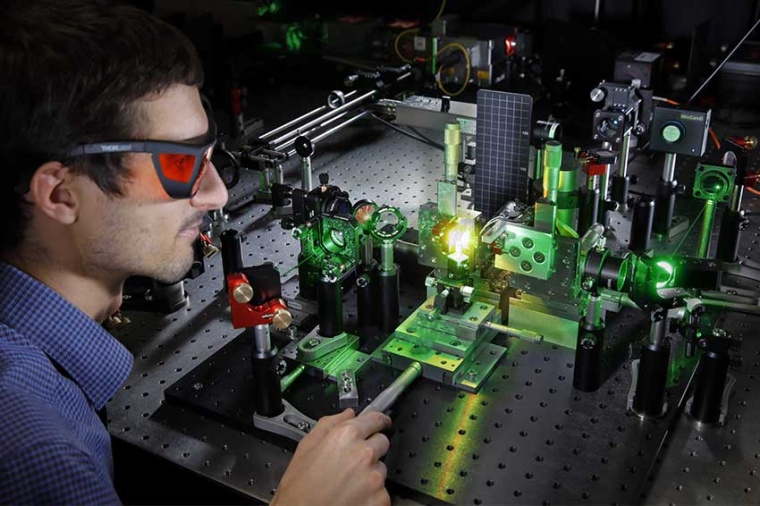
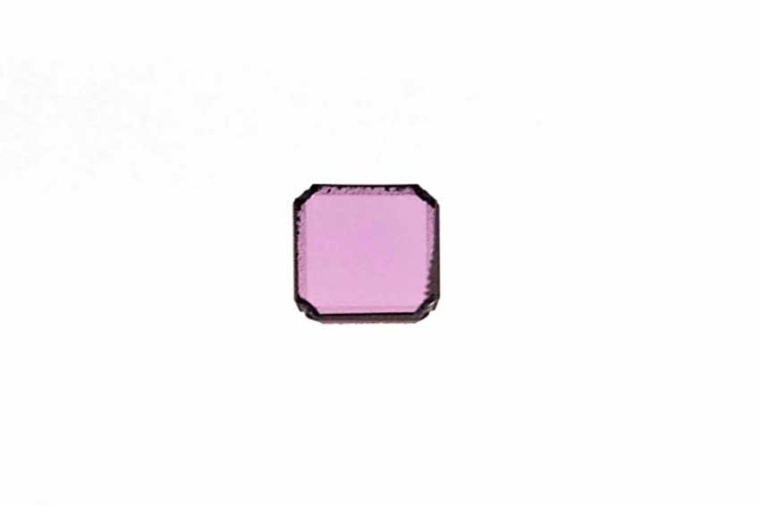
In medical diagnostics, sensitive sensors are needed to measure, for example, the weak magnetic fields of heart and brain activity (MCG, MEG) of the human body and create images of the body via magnetic resonance imaging (MRI), which enables the detection of diseases at an early stage.
However, only a few highly sensitive magnetic field sensors achieve the necessary precision and each of them presents major technical obstacles for clinical application. The already established squid sensors require complex cryogenic cooling of about -270 °C. Vapor cell magnetometers (OPMs) are another option. Although these achieve the highest sensitivities even without cryogenic cooling, they have the disadvantage that they require absolute shielding of all background fields, including the earth’s magnetic field, and thus place massive structural requirements on rooms and buildings. Due to this, the more inaccurate electric measurements (ECG, EEG) continue to be common in everyday clinical practice.
At the Fraunhofer Institute for Applied Solid State Physics IAF in Freiburg, a project team is already researching a more suitable alternative: “Our goal is to develop an extremely sensitive magnetic field sensor that works at room temperature as well as in the presence of background fields and is thus useful for clinical implementations,” explains Dr Jan Jeske, project manager at Fraunhofer IAF.
In the project NV-doped CVD diamond for ultra-sensitive laser threshold magnetometry (short: DiLaMag), which is funded by the German Federal Ministry of Education and Research, Jeske and his team are researching a worldwide unique approach for highly sensitive quantum magnetic field sensors. For the first time, they use diamond in a laser system, thus enabling considerably more precise magnetic field measurements.
First experimental demonstration of laser threshold magnetometry
After several years of research effort, Jeske’s team has reached an important milestone: It has demonstrated the world’s first measurement of magnetic-field-dependent stimulated emission. In the process, the researchers made an interesting discovery: “We observed a very relevant and previously unknown physical process in NV diamond: the absorption of red light induced by green laser irradiation,” Jeske reports.
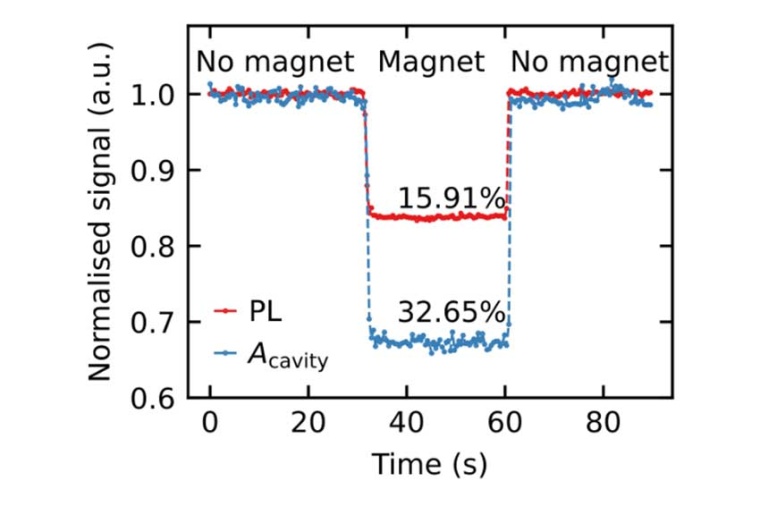
Using NV diamond as a laser medium, they not only achieved a 64 % amplification of the signal power by stimulated emission. The project team was even able to set a worldwide record: The magnetic-field-dependent emission shows a contrast of 33 % and a maximum output power in the milliwatts regime. This is a new contrast record in magnetometry with NV ensembles.
Stimulated emission is responsible for this. “We were able to show that this record would not have been possible with spontaneous emission. Thus, we have experimentally demonstrated the theoretical principle of laser threshold magnetometry for the first time,” Jeske emphasizes.
These results also show the advantages of diamond-based laser threshold magnetometry over conventional methods.
Reference: Hahl et al.: Magnetic-Field-Dependent Stimulated Emission from Nitrogen-Vacancy Centres in Diamond, Sci. Adv. 8, eabn7192 (2022); DOI: 10.1126/sciadv.abn7192
Further reading: Measuring the smallest magnetic fields with diamond and laser, WileyIndustryNews, 11.4.2022 • Quantum diamond biomarker detection – targeting simpler, faster and ultrasensitive medical diagnostics; (Element Six, QDTI), PhotonicsViews 19(1), February/March 2022
Company
Fraunhofer Institute for Applied Solid State Physics IAFTullastraße 72
79108 Freiburg
Germany

most read

Schaeffler bundles Defense and New Space activities under new CEO
Celia Pelaz takes over the position of CEO Defence & New Space at Schaeffler on October 1, 2026 and becomes Chairwoman of the Management Board of Stech Defence GmbH.
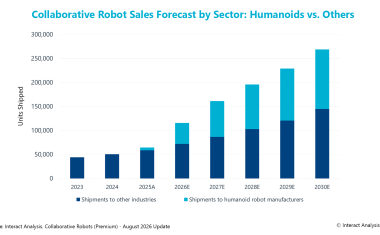
Humanoid robotics is driving demand for cobot arms and actuators
According to recent analyses, global production of humanoid robots exceeded the 20,000-unit mark in 2025 and is expected to more than triple in 2026.
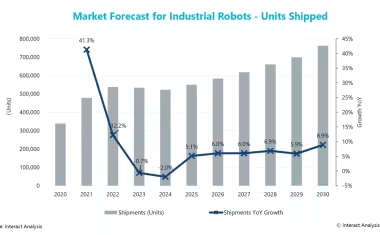
Forecast: Significant Growth in Industrial Robotics by 2030; Cobots Are Growing the Fastest
According to a recent analysis by Interact Analysis, global sales of industrial robots are expected to rise from about 550,000 units in 2025 to just over 760,000 units in 2030.
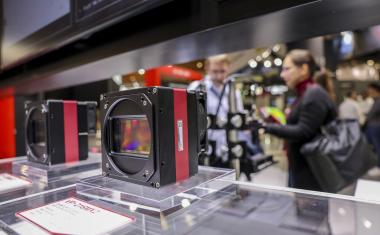
Vision 2026 Breaks Exhibitor Record
About 500 exhibiting companies—about two-thirds of which are from abroad and about 30 percent of which are first-time exhibitors—are showcasing their products at the trade show.

IMTS 2026: America's Manufacturing Sector Focuses on Growth and Technology
The largest manufacturing trade show in the Western Hemisphere is bringing together 1,788 exhibitors this year, including about 400 companies participating for the first time.